31 Aug 2026
What to Know Before Choosing Residential Gas Kitchens Installation for Your Home
A professional residential gas kitchens installation is the process of putting in and testing gas lines for stoves, ovens, and cooktops. Before you choose this upgrade, you should understand local permit rules, ventilation needs, and where your current utility lines run. It is also vital to hire a licensed gas fitter to keep your home safe and compliant with the law.
Professional Cooking Control: Residential Gas Kitchens Installation in Calgary
Upgrading to a gas stove is an exciting change for your home. People love gas stoves because they heat up fast. They also let you control cooking heat with ease. If you have an electric stove now, switching to gas takes a little prep work.
First, check if your home has enough gas. Your gas meter can only handle a set amount of fuel. If you add a large new stove, you might need a bigger meter. A pro installer will check your total gas load to see if you need an upgrade.
Second, you need good ventilation. Gas burners release small amounts of moisture and fumes when they burn. To keep your indoor air clean, you need a good range hood. This hood must vent air outside, not just spin it back into the room.
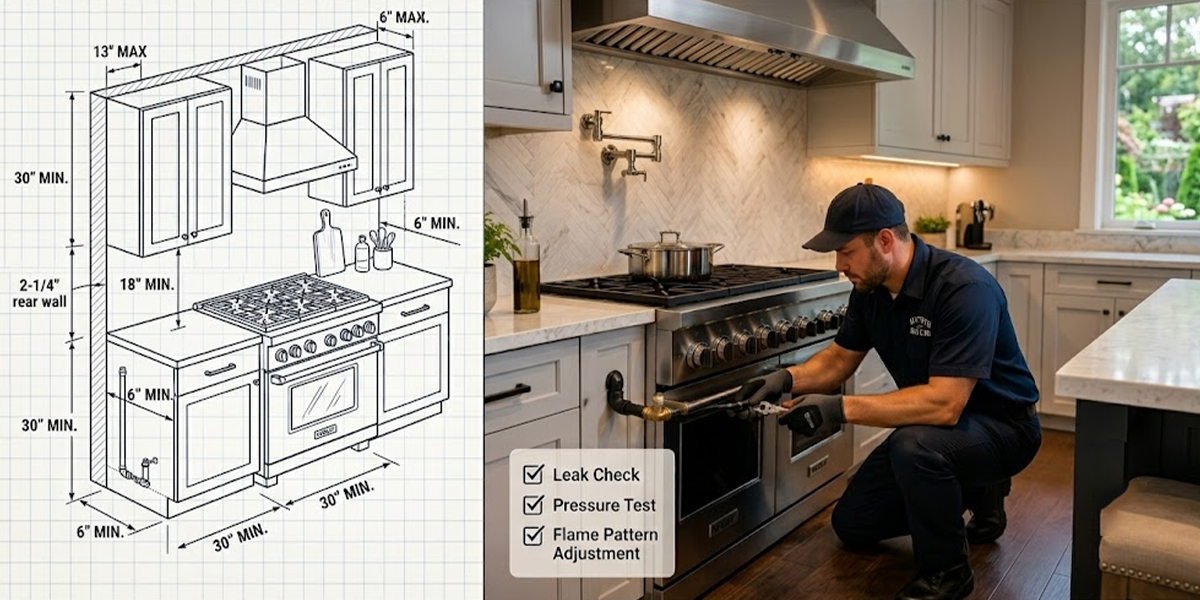
Third, you need to make sure that your cupboards have the appropriate clearance to the gas stove. A minimum clearance of 18 inches is required from the cooking surface to the bottom of any adjacent overhead cabinet. A minimum of 30 inches is required from the cooking surface to the bottom of a range hood or over-the-range microwave. In addition, there other clearances to consider from the side of the stove to the nearest wall or adjacent appliance.
Finally, safety comes first. In Alberta, the Safety Codes Council sets strict rules for gas safety. It is dangerous and illegal to run gas lines yourself. Hiring a certified pro for your residential gas kitchens installation in Calgary ensures the work meets the Canadian Gas Code. This keeps your family safe and protects your insurance.
Who Handles What? Key Roles and Responsibilities in Gas Line Projects
A successful job relies on clear tasks, and knowing who handles each part of the project keeps everything safe and on schedule. The process begins with the homeowner, who is responsible for choosing certified appliances that match the home’s fuel type. As the homeowner, you will need to provide the appliance spec sheets to your installer, decide exactly where the new stove or grill will sit, and plan for a strong range hood. Finally, you must clear the workspace around your utility rooms and gas meter so the team can work without hazards.
The certified gas fitter then takes over the technical duties. Your contractor will start by securing all municipal gas permits before any physical work begins on your property. They will calculate your home’s total gas load to make sure your pipes can handle the new appliance demand safely. Once the plan is set, they will run the new pipes in strict compliance with Provincial codes, and they will perform pressure tests to ensure there are no leaks before turning your gas back on.
Bringing Your Vision Safely to Life
A gas kitchen brings professional cooking right into your home. To enjoy your new range safely, the setup must be done right. Every step requires expert hands. This includes calculating gas loads and passing local safety inspections.
Since 2004, Scottco Gas Ltd. has helped local homeowners stay safe. We manage your project from start to finish. We also offer a clear safety guarantee. You do not pay us until a licensed city inspector signs off on your new line. Choose our master journeymen to protect your home and family.
Contact Scottco Gas Ltd. Today
Ready to upgrade your home with a beautiful, professional-grade gas kitchen? Trust the local experts to handle your gas lines safely and efficiently.
Frequently Asked Questions
1. Do I need a permit for a residential gas stove installation?
Yes. In Alberta, you legally need a permit for all new gas line installations or updates. A licensed, certified gas fitter must pull this permit to guarantee your project complies fully with provincial safety codes.
2. Can I install a gas stove or cooktop myself?
No. Running gas lines yourself is highly dangerous and illegal in Alberta. Performing uncertified work automatically voids your homeowner insurance. You must always hire a certified journeyman gas fitter to safely hook up and test your appliances.
3. What is the average lifespan of a residential gas line?
Professionally installed gas lines easily last over fifty years. Using high-quality, corrosion-resistant yellow plastic or protected steel pipes ensures long-term safety. Scheduling routine appliance checkups with a licensed professional will keep your system running flawlessly.
4. How do I know if my gas line has a leak?
The clearest sign of a natural gas leak is a distinct rotten-egg odor. You might also hear a soft hissing sound near your appliances. If you suspect a leak, leave your home immediately and call for emergency assistance.